How to Implement Lean Manufacturing: A Practical Guide for Operations Managers
Lean manufacturing has become essential for manufacturers looking to stay competitive in today's challenging environment. If you're struggling with inefficiencies, waste, or the disconnect between what's documented and what actually happens on your shop floor, implementing lean principles could transform your operations. This guide walks you through how to implement lean manufacturing effectively, with practical steps tailored for operations managers facing real-world challenges.
Understanding Lean Manufacturing Fundamentals
Lean manufacturing is a systematic approach focused on maximizing productivity and value whilst eliminating waste. Originating from the Toyota Production System, lean methodology centres on delivering exactly what customers value—nothing more, nothing less—whilst continuously improving every aspect of production.
At its core, lean identifies seven types of waste (often remembered by the acronym TIMWOOD): Transport, Inventory, Motion, Waiting, Overproduction, Over-processing, and Defects. These wastes add no value to the customer and drain resources from your operation. The goal of lean implementation is to systematically identify and eliminate these inefficiencies.
The Five Core Principles of Lean
Before diving into implementation, understanding lean's five foundational principles is essential:
Define Value: Start by identifying what your customer actually values and is willing to pay for. This isn't about what you think is important—it's about understanding your customer's perspective.
Map the Value Stream: Document every step in your production process, from raw materials to finished product. This reveals which steps add value and which create waste.
Create Flow: Ensure that value-adding steps flow smoothly without interruptions, delays, or bottlenecks. Products should move through your facility seamlessly.
Establish Pull: Produce only what customers need, when they need it. This Just-in-Time approach prevents overproduction and excess inventory.
Pursue Perfection: Lean is never "finished." Continuous improvement (kaizen) means constantly seeking ways to reduce waste and improve quality.
Step-by-Step Lean Implementation Process
Step 1: Secure Leadership Commitment and Communicate the Vision
Lean transformation starts at the top. Without genuine leadership commitment, lean initiatives typically fail. As an operations manager, you need to ensure senior management understands the benefits, challenges, and resource requirements of lean implementation.
Communicate clearly why lean matters for your organisation. Focus on tangible benefits: reduced costs, improved quality, faster lead times, and enhanced customer satisfaction. Share specific goals and how lean principles will help achieve them.
Step 2: Educate Your Team and Build a Lean Culture
Resistance to change is the most common barrier to successful lean implementation. Your frontline operators possess invaluable knowledge about what actually happens on the shop floor—they're your greatest asset in identifying waste and improvement opportunities.
Invest in comprehensive training that explains lean principles in practical terms. Help your team understand that lean isn't about eliminating jobs—it's about eliminating wasteful activities that frustrate workers and customers alike. Encourage participation and make it clear that everyone's input matters.
Step 3: Select a Pilot Area and Conduct Value Stream Mapping
Rather than attempting organisation-wide transformation immediately, start with a pilot project in one area or production line. This allows you to demonstrate success, learn valuable lessons, and build momentum.
Conduct thorough value stream mapping for your pilot area. Walk the process from start to finish, documenting every step. Identify which activities add value from the customer's perspective and which don't. Calculate lead times, cycle times, and wait times. This baseline measurement is crucial for tracking improvement.
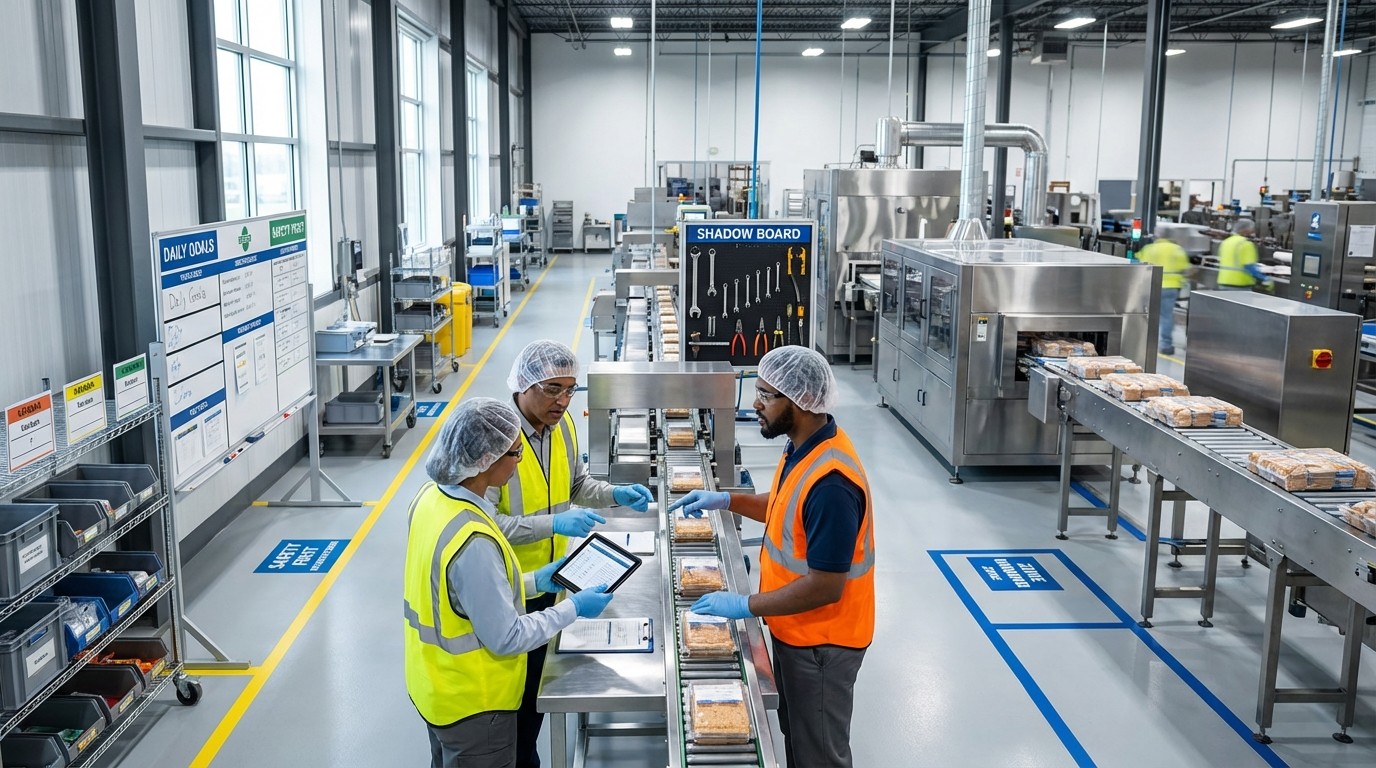
Step 4: Implement 5S for Workplace Organisation
5S (Sort, Set in Order, Shine, Standardise, Sustain) creates the foundation for lean manufacturing. This methodology organises the workspace to improve efficiency, safety, and employee morale.
Sort: Remove unnecessary items from the workspace
Set in Order: Organise tools and materials for easy access
Shine: Clean and inspect the workspace regularly
Standardise: Create standards for maintaining organisation
Sustain: Develop habits and systems to maintain 5S long-term
A well-organised workspace reduces motion waste, improves safety, and makes problems immediately visible. For manufacturers still relying on paper-based systems, 5S also highlights the inefficiencies of scattered documentation and missing information.
Step 5: Establish Pull Systems and Just-in-Time Production
Move away from push-based production (making products based on forecasts) towards pull-based systems (producing only what customers order). Implement kanban systems—visual signals that trigger production or replenishment only when needed.
This dramatically reduces inventory carrying costs and the waste of overproduction. However, pull systems require reliable processes and accurate, real-time information about demand and production status.
Step 6: Focus on Continuous Improvement and Problem-Solving
Establish regular kaizen events—focused improvement sessions where teams identify problems and implement solutions. Teach problem-solving methodologies like the "5 Whys" technique to identify root causes rather than treating symptoms.
Create systems that make problems visible immediately. When issues surface, view them as opportunities for improvement rather than reasons for blame. This cultural shift is essential for sustaining lean principles.
Step 7: Measure, Monitor, and Refine
Track specific lean metrics to measure progress and identify areas needing attention. Key performance indicators include:
Overall Equipment Effectiveness (OEE): Measures equipment availability, performance, and quality
Lead Time: Total time from customer order to delivery
First Pass Yield: Percentage of products made correctly the first time
Work-in-Progress (WIP): Amount of unfinished inventory
Defect Rate: Percentage of products failing to meet quality standards
Review these metrics regularly and use data to guide continuous improvement efforts. Remember, the goal isn't perfect metrics—it's continuous progress.
Common Challenges and How to Overcome Them
Even well-planned lean implementations face obstacles. Leadership commitment may wane when results don't appear immediately. Employees may resist new processes out of fear or habit. Siloed departments may struggle to work together on value stream improvements.
Success requires persistence, clear communication, and celebrating small wins. Start with achievable goals that demonstrate tangible benefits quickly. Share success stories across your organisation. When resistance emerges, listen to concerns and address them directly.
Many manufacturers also struggle with the gap between documented processes and shop-floor reality. Traditional paper-based logs and static work instructions quickly become outdated, creating confusion and inconsistency. Digital tools that capture real-time data and make knowledge accessible exactly when and where it's needed can bridge this gap, enabling true lean principles to take hold.
Integrating Technology with Lean Principles
Modern lean implementation increasingly leverages digital tools to enhance traditional methodologies. Mobile-first platforms that allow operators to capture data through voice, text, or images eliminate the manual data entry burden that creates waste and errors. When operators can document issues, contribute insights, and access current procedures instantly, the barrier to continuous improvement drops to zero.
AI-powered analytics can identify patterns in operational data that humans might miss, predicting equipment failures before they occur and highlighting improvement opportunities across shifts and production lines. This technology doesn't replace lean principles—it amplifies them, making waste more visible and improvements more achievable.
Building Sustainable Lean Operations
Implementing lean manufacturing isn't a one-time project—it's an ongoing journey toward operational excellence. Success requires commitment from leadership, engagement from frontline workers, systematic problem-solving, and the right tools to support continuous improvement.
Start small, focus on building a culture of improvement, and use data to guide your decisions. Whether you're taking your first steps toward lean or refining an existing programme, remember that every manufacturer's lean journey is unique. The principles remain constant, but your application should address your specific challenges, customers, and capabilities.
By systematically eliminating waste, empowering your operators, and pursuing continuous improvement, you'll create a more efficient, profitable, and responsive operation—one that delivers genuine value to your customers whilst making better use of every resource at your disposal.

Ready to future-proof your Operations?
Discover how Oppr's integrated platform simplifies data capture, centralizes knowledge, and delivers the actionable intelligence you need to empower your team and drive real ROI.