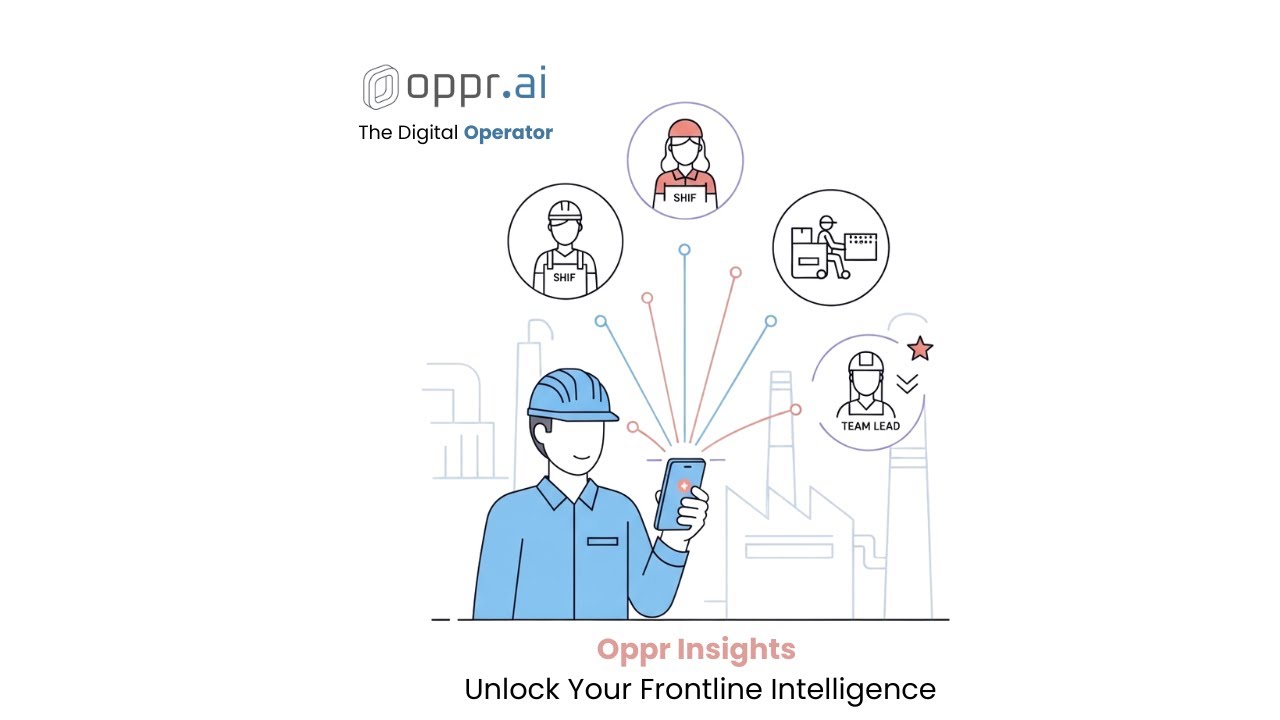
The Data Gap: Why the "Why" Is So Hard to Capture
Last month, I was walking through a client's plant when the line suddenly stopped.
Everyone turned to the dashboard. Alarms lit up like a Christmas tree.
"Pressure dropped." "Line 3 stopped." "Temperature HIGH."
The data told us what happened.
But the person who solved it didn't look at a single screen. One of the senior operators walked over, listened for a second, and said quietly:
"That bearing sounds different."
Ten minutes later, maintenance confirmed the issue — a failing coupling.
No sensor caught it. No dashboard flagged it. Only experience did.
That's when it hit me:
We're flooded with machine data, but we're blind to human data. The insights, observations, and instincts that operators have — the "why" behind the "what" — are the missing link in every plant's optimization story.
But why is the 'why' so hard to capture?
- 1Tools with High Barriers: Documentation happens at a desk, long after the context is gone.
- 2Disconnected Silos: Notes, spreadsheets, and "tribal knowledge" live everywhere except where decisions are made.
- 3Aging Workforce: Every retirement takes decades of untapped insight with it.
💡 Here's the shift we need: Stop treating this as a documentation problem. Start seeing it as an intelligence opportunity.
Humans are the most advanced sensors in any factory.
If we can make capturing their insights as easy as speaking to a device or taking a quick photo — we finally connect the WHAT with the WHY.
That's when operations stop just reacting — and start learning.
👂 What's one "human insight" that saved the day in your operations?
KEEP READING