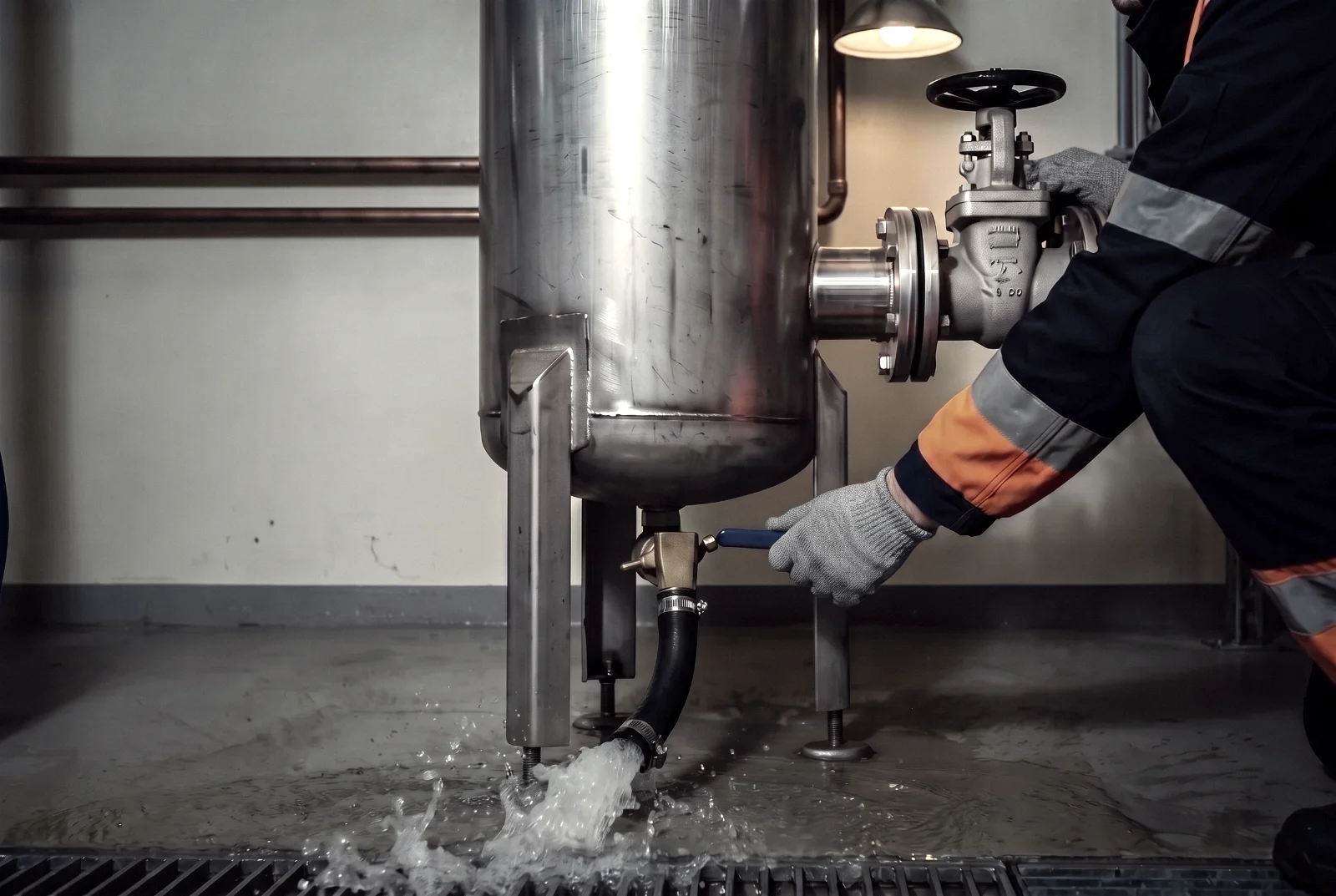
The day shift runs well. The night shift does not. Same line, same recipe, same targets. Different results.
Most plant managers know this story. Many have told it themselves. And soon the talk turns to people: who was on shift, who skipped a check, who needs more training.
We think that story is almost always wrong. The gap between shifts is real. But it tells you something about your process, not about your people.
Why it becomes a story about people
A result on a line is easy to see. Its cause is not. The production report shows the output of each shift, with the name of the shift lead next to it. The machine data shows that the pressure went up, but not why.
So the only visible difference between two results is the crew. That makes the next step feel logical. You talk to the crew, add a check or plan a training.
Sometimes that helps for a few weeks. Then the gap comes back, because nothing in the process changed.
What is really different at night
When we walk a line with the people who run it, the differences between shifts are rarely about effort. They are about conditions.
- 01No maintenance crew on the floor. At night there is an engineer on call. The crew must decide alone if a problem is worth the call.
- 02Different material. A batch that arrives late in the day often runs at night.
- 03Stops that nobody sees. The crew fixes a short stop alone, writes “Other” in the log and runs on.
Each of these conditions changes the work. And each crew finds its own way to deal with them.
The gap is evidence about the process
Two shifts on the same line with two different results is not noise. It is a test that your plant runs every day, at no cost. One crew found a method that works better under the same conditions. The other crew did not, or did not know that the method exists.
The gap between shifts is evidence about your process. It is not a problem with your people.
The difficulty is that this evidence is written nowhere. The better method lives in the heads of one crew. It goes home at the end of the shift. When one of those operators retires or moves to another line, the method goes too.
One filter, two methods
Take an example. Filter F-101 blocks after a thick batch. Each time it blocks, the line slows down or stops.
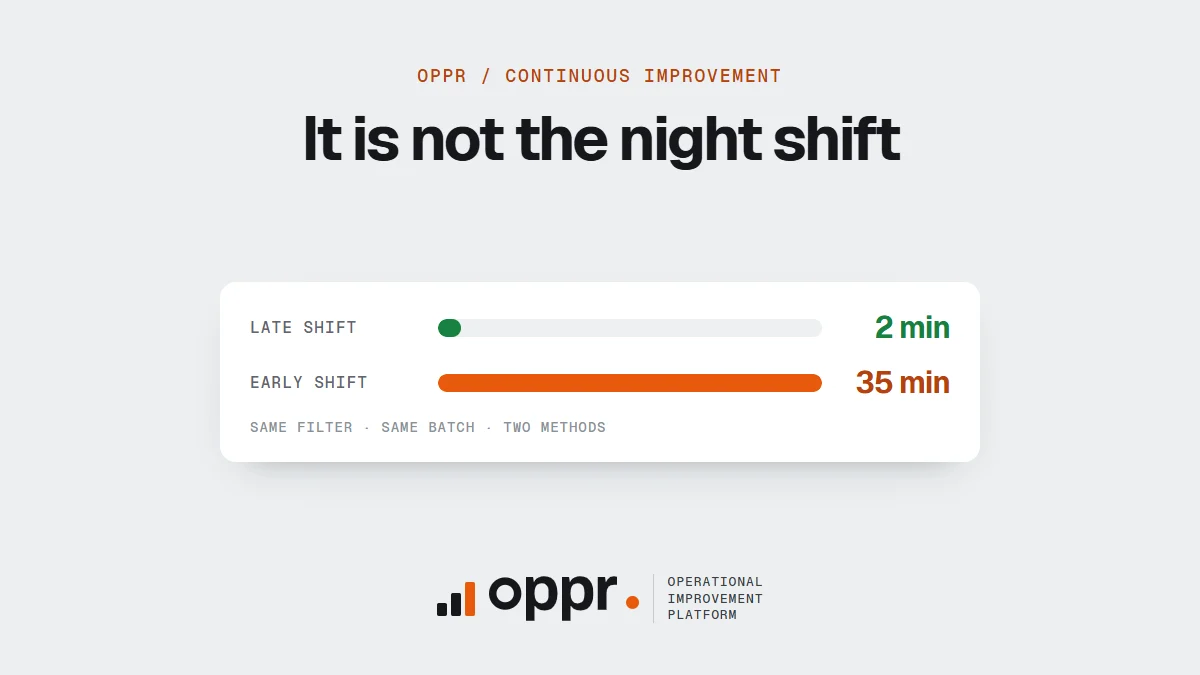
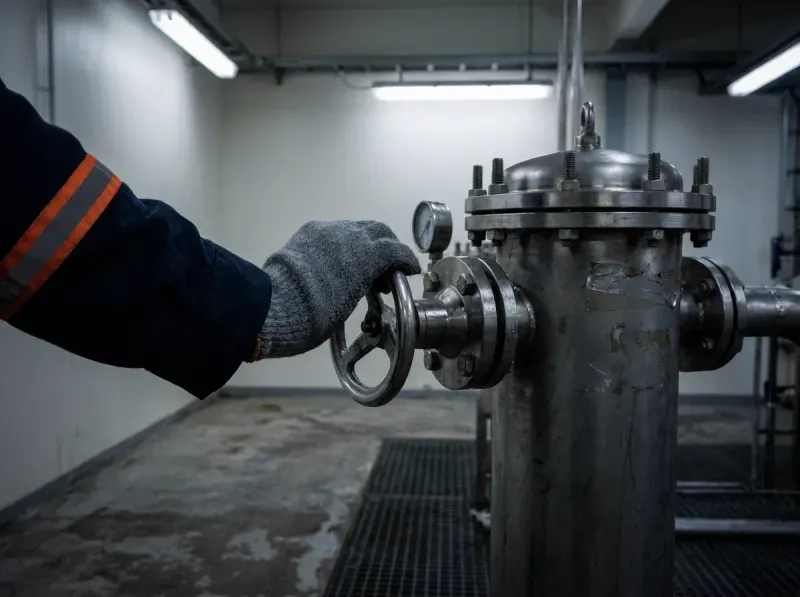 Late shiftLine keeps running. 2 min lost.This crew flushes longer, with the pump at half speed.
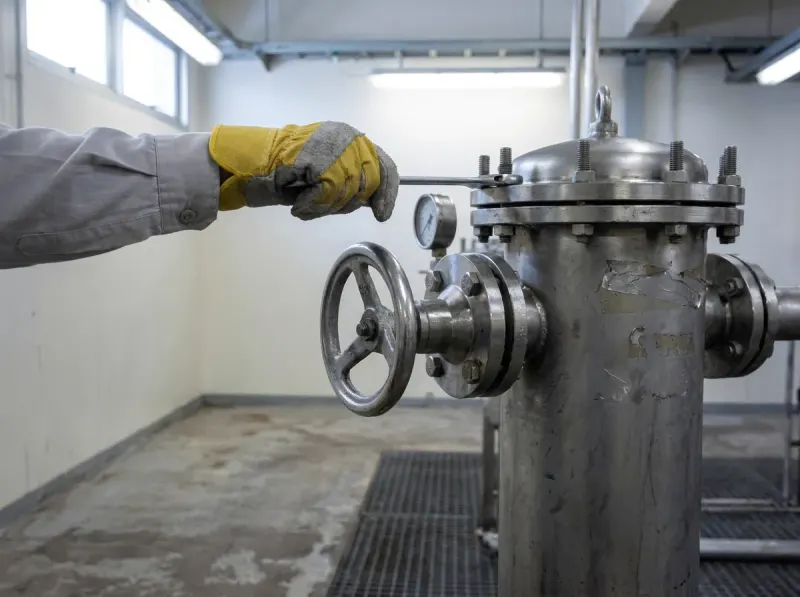 Early shiftLine stops. 35 min lost.This crew does not know that method. It stops and opens the filter.
The late shift flushes the filter longer, with the pump at half speed. The line keeps running and loses about 2 minutes. The early shift does not know that method. It stops the line and opens the filter, and each stop costs about 35 minutes.
In this example the filter blocks 38 times a year. With the slow method that is about 22 hours of lost production, at one filter.
Nobody did anything wrong. The early shift follows the standard work, which says “flush for 2 minutes”. The late shift found a better way and never wrote it down.
From one crew’s habit to one standard
To close the gap, the method of the best shift must become the method of every shift. We do that in three steps.
- 01Identify. Operators record what they see at the machine: a voice note, a photo or a few words. Each note goes on one timeline, next to the machine data.
- 02Analyze. Practical AI connects what people see with what machines measure and uncovers the root cause. Your engineers confirm it on the floor.
- 03Realize. The proven method becomes standard work. It is published for every shift at once.
In the example, the repeat stops at F-101 drop to zero. The crew that found the method gets the credit. The whole plant gets the method. We follow this example step by step in From 35 minutes to 2: one filter, three steps.
None of this scores a person. Oppr measures processes and documents, never people. A crew shares what it knows when that knowledge cannot count against it.
So the next time you hear that the night shift is the problem, ask a different question.
What does one of your shifts know about the line that the others do not?